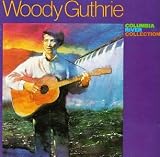
Rate Points :5.0
Binding :Audio CD
Label :Rounder / Umgd
Manufacturer :Rounder / Umgd
ProductGroup :Music
Studio :Rounder / Umgd
Publisher :Rounder / Umgd
UPC :011661103627
EAN :0011661103627
Price :$17.98USD
Lowest Price :$11.91USD
Customer ReviewsPart of History
Rating Point :5 Helpful Point :4
This is a wonderful collection of Woody Guthrie songs. There will never again be someone like Woody. He spoke of the country he loved and the causes he believed in, and is still loved by many. Roll on Columbia, roll on!
Essential Guthrie
Rating Point :5 Helpful Point :14
Like Dust Bowl Ballads, the Columbia River Collection can be a bit tedious - guitar & harmonica and Woodys vocals deliver traditional melodies and Woodys clever but unpretentious lyrics. Dust Bowl Ballads was a "concept album" before that term came into being, and so is this collection.
Dust Bowl Ballads has a more homogeneous sound, as the songs were recorded during one session at a New York studio. The Columbia River Collection gathers recordings from here and there, so the sound and recording quality varies from song to song. But Woody wrote nearly all, if not all, of these songs during a month-long stint with the government-sponsored Bonneville Dam project. This collection is more optimistic than Dust Bowl Ballads Woody only protests that Uncle Sam doesnt sponsor more projects like the Bonneville Dam.
Woody was in his prime in the early 1940s, and every song here has some special quality to enlighten and amuse the listener. They celebrate Work and Utility and Ambition. Every American can be proud of them most Americans will learn something from them.
Rating Point :5 Helpful Point :6
Woody Guthrie is the father of American Folk Music (Joe Hill would be the grandfather, Peter Seeger the uncle, and Bob Dylan the poet laureate). Guthrie worked for the Bonneville Power Administration in the month of May 1941 as a "information consultant" for the U.S. Department of the Interior. During that month he wrote 26 sons about the dams being built on the mighty Columbia River that flows between Oregon and Washington to the sea. Seventeen of those songs are collected on this 1988 album that reflects one of the most productive periods of Guthries prolific career and some of his best songs such as "Hard Travelin," "Grand Coulee Dam," and "Pastures of Plenty."
The songs on the "Columbia River Collection" were necessary because the BPA was engaged in a political battle in the Pacific Northwest to own the power being produced by the Columbia River dams. There were elections that would determine if the region would have public or private ownership and distribution of electricity, and Guthries songs were basically political ads on the BPAs behalf. The BPA made a short film about the dams, "Hydro," and wanted to make a feature length musical film to show in story and song how the power generated by the dams, administered by the BPA, would bring a better life to the citizens of the Pacific Northwest. Folklorist Alan Lomax heard about the plan and recommended Guthrie to write the songs. Guthrie was unemployed so he drove up from southern California to Portland with his wife Mary and their three children, packed in an old Pontiac. The 28-year-old singer auditioned for the BPAs director, Dr. Paul Raver, who gave Guthrie a 30-day contract as a temporary employed at the rate of $266.66 a month to write a song a day.
Here you will find a mixture of anthems, talking blues, and ballads from Americas troubadour. The signature song here would have to be "Roll on, Columbia," which credits Leadbelly as a co-writer because Guthrie uses a chorus from "Irene Goodnight." Students of folk music will notice that Guthrie borrowed from traditional folk songs including "Old Smokie," "Pretty Polly," "Muleskinners Blues," and others as well. Eleven of these tracks are Guthries original recordings, made in Portland, Oregon in 1941 but never released until now, including "Roll on Columbia" and "Roll Columbia, Roll." Only a few of the songs made it into the soundtrack of the actual film, "The Columbia," which was not released until 1948, at which point neither a propaganda film nor Guthrie songs were needed to prove the impact of the BPA on the Pacific Northwest. We are fortunate to have these recordings because in 1953 the Eisenhower administration ordered all copies of the film and its songs destroyed when it was decided Guthrie was a communist. But the acetate disks still remain and so do these songs.
Woody Guthrie certainly supported the working man and as indicated by the lyrics of "The Biggest Thing That Man Has Ever Done" he saw the dams on the Columbia River as monuments to the working class that were going to bring significant improvements to their daily lives. The other six songs, including "Pastures of Plenty," were previous released by Smithsonian Folkways. There is a lot to be said about finally hearing Guthrie sing songs like "Jackhammer Blues" that I know from Guthrie tribute albums and such. But what is important here is that you have most of Guthries songs from this period on a single album. Along with "Dust Bowl Ballads" this is one of the most thematic Woody Guthrie albums available and Rounder does a pretty good job of figuring out an order in which to put the tracks.
 Amazon.com essential recordingIn was in March 1940 that Alan Lomax, then a young folklorist at the Library of Congress in Washington, D.C., brought Woody Guthrie into a recording studio at the Department of the Interior. What emerged from three days
0 ความคิดเห็น:
แสดงความคิดเห็น